
Mercedes-Benz GLB Discontinued: Key Highlights, Features, and What It Means for India’s 7-Seater SUV Market (2025)
The Mercedes Benz GLB 7 Seater SUV has officially been discontinued in India, marking the end of its brief two-year stint in the market. Launched to much anticipation in December 2022, this compact SUV was designed to offer a blend of luxury and practicality for families. However, despite its appea...
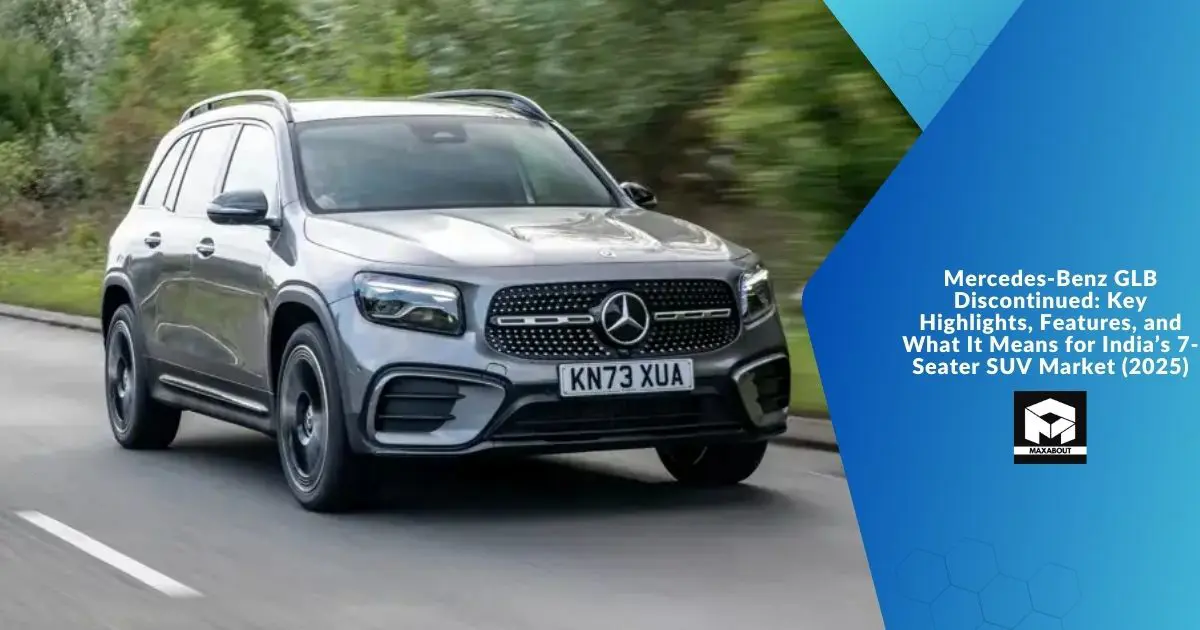
The Mercedes Benz GLB 7 Seater SUV has officially been discontinued in India, marking the end of its brief two-year stint in the market. Launched to much anticipation in December 2022, this compact SUV was designed to offer a blend of luxury and practicality for families. However, despite its appealing features and competitive pricing, it has now sold out and is no longer available for new purchases. Here's a closer look at what led to this decision and its implications for Mercedes-Benz in India.
The Mercedes-Benz GLB, a seven-seater SUV, has been discontinued in India. It was positioned as Mercedes' most affordable seven-seater SUV option. The decision to discontinue the GLB comes after a relatively short period on the Indian market. Let's take a closer look at the details surrounding its launch, specifications, and the reasons behind its discontinuation.
The Mercedes-Benz GLB was launched in India in December 2022. It was marketed as a 'baby GLS' due to its squared-off styling, which gave it a distinctive look within the Mercedes-Benz SUV lineup. The initial reception was fairly positive, with many appreciating the GLB's practicality as a seven-seater in a relatively compact form factor. However, it was brought to India as a completely built-up unit (CBU), which affected its pricing and availability. The GLB seven-seat SUV aimed to offer a blend of luxury and practicality, targeting families looking for a premium yet versatile vehicle.
The GLB was available in three variants: 200, 220d, and 220d 4Matic. These variants offered both petrol and diesel engine options. The 1.3-liter turbo petrol engine in the GLB 200 produced 163 hp. The diesel variants featured a 2.0-liter engine. Here's a quick overview:
The Mercedes-Benz GLB was priced between Rs 63.80 lakh to Rs 69.80 lakh (ex-showroom). This pricing placed it as the entry-level seven-seater SUV in the Mercedes-Benz India lineup. Its market position was aimed at those seeking a luxury SUV with the added practicality of a third row, but it faced competition from other luxury SUVs and larger, more established seven-seater options in the market. The pricing strategy was intended to attract a broader customer base, but the CBU import route limited its competitiveness.
The Mercedes-Benz GLB, while a decent offering, apparently didn't set the sales charts on fire in India. The demand simply wasn't high enough to justify its continued presence in the market. It occupied a somewhat niche space, being a seven-seater SUV from a luxury brand, and that limited its appeal. Other models in the Mercedes-Benz lineup, and from competing brands, likely cannibalized its potential customer base. The sales figures probably didn't meet the company's expectations, leading to the decision to pull the plug.
The GLB was brought into India as a Completely Built-Up (CBU) unit. This means it was fully manufactured elsewhere (specifically, Mexico) and then imported. This approach has a few drawbacks:
The CBU route often makes a car more expensive and less flexible in terms of supply. If Mercedes-Benz faced issues with production capacity or import logistics, it could have further contributed to the decision to discontinue the GLB.
The Indian automotive market is fiercely competitive, especially in the luxury SUV segment. The Mercedes-Benz India GLB faced stiff competition from other brands offering similar vehicles, sometimes at more attractive price points or with more appealing features. These competitors might have included:
With so many options available, the GLB needed a strong unique selling proposition to stand out, and it seems it didn't quite manage to do so. The market dynamics favored other models, ultimately contributing to the GLB's discontinuation.
The Mercedes-Benz GLB was designed with a focus on both comfort and technology. The interior boasted a user-friendly infotainment system, typically a 10.25-inch screen, that integrated seamlessly with the car's functions. You could easily access navigation, media, and vehicle settings. The GLB also featured dual-zone climate control, ensuring both the driver and passengers could set their preferred temperatures. Wireless phone charging was a convenient addition, and the panoramic sunroof really opened up the cabin, making it feel more spacious. The GLB infotainment system also supported Android Auto and Apple CarPlay.
Safety was a key consideration in the GLB's design. It came equipped with a comprehensive suite of safety features, including multiple airbags strategically placed throughout the cabin. Electronic Stability Control (ESC) helped maintain vehicle control in challenging driving conditions. Many models also included advanced driver-assistance systems (ADAS) like active brake assist, lane keeping assist, and blind spot monitoring. These features worked together to enhance driver awareness and help prevent accidents. While specific safety ratings may vary by region and model year, the GLB generally performed well in crash tests conducted by independent safety organizations.
The Mercedes-Benz GLB offered a choice of petrol and diesel engines, each designed to provide a balance of performance and efficiency. The GLB 200, for example, featured a 1.3-liter turbo petrol engine producing around 163 horsepower. Diesel variants, such as the GLB 220d, used a 2.0-liter engine with approximately 190 horsepower. Both engines were paired with automatic transmissions, delivering smooth and responsive acceleration. The 4MATIC all-wheel-drive system was available on select models, providing enhanced traction and stability, especially in adverse weather conditions. The GLB wasn't designed to be a sports car, but it offered adequate power for everyday driving and comfortable long-distance cruising.
The GLB provided a comfortable ride, making it suitable for families and those who prioritize a smooth driving experience. Its suspension was tuned to absorb bumps and road imperfections, while still providing decent handling. The car's compact size made it relatively easy to maneuver in urban environments, and the available parking assist features further simplified parking in tight spaces.
The discontinuation of the GLB has definitely caused some ripples within Mercedes-Benz's India lineup. It's not just about one less model; it's about how they're adjusting their strategy to fill that void, especially in the affordable luxury SUV segment.
The most direct impact is the shift towards promoting the EQB as the GLB's electric successor. Mercedes-Benz is clearly banking on the growing interest in EVs to maintain a presence in the 7-seater SUV market. The EQB, essentially the electric version of the GLB, is still available in India, with two variants: the EQB 250+ and the 350 4Matic. Prices start at ₹72.20 lakh (ex-showroom) and go up to ₹78.90 lakh (ex-showroom).
It's unclear if Mercedes-Benz plans to introduce another gasoline-powered 7-seater SUV in the same price bracket as the GLB. They might be focusing on higher-end models or pushing the EQB as the primary option for customers needing that extra row of seats. It's a wait-and-see situation, but here are some possibilities:
The GLB's discontinuation likely means a broader adjustment in Mercedes-Benz's market strategy in India. They might be re-evaluating their import strategy, given that the GLB was a CBU (Completely Built Unit). This could involve:
The decision to discontinue the GLB reflects a larger trend in the automotive industry, with manufacturers increasingly focusing on electric vehicles and streamlining their model lineups. It will be interesting to see how Mercedes-Benz adapts to the changing market dynamics in India and whether they will eventually introduce another 7-seater SUV to fill the gap left by the GLB.
So, the GLB is gone. What do the people who actually bought one think? Well, it's a mixed bag, honestly. Some owners are bummed, saying they loved the practicality of the seven seats in a relatively compact package. They talk about road trips with the kids and how it was just the right size for city driving but still roomy enough for family adventures. Others? Not so much. Some had issues with the third-row space, saying it was too cramped for adults, which, let's be real, was kind of expected. There were also some grumbles about the engine feeling a bit underpowered when fully loaded. But overall, the vibe seems to be that it was a decent car that filled a specific niche, and now that niche is...empty?
For those who were considering buying a GLB, the news of its discontinuation probably came as a surprise. I mean, you do your research, you find a car that seems to fit your needs, and then BAM! It's gone. Some potential buyers are likely scrambling to find alternatives, maybe looking at other seven-seaters or even considering the EQB as Mercedes pushes that as the replacement. Others might be tempted to snag a used GLB, hoping to get a good deal. It really depends on what they valued most about the GLB in the first place. Was it the brand? The size? The seven seats? All of those things will factor into their next move.
What's going to happen to the used GLB market? That's the big question. You know how it goes, right? When a car is discontinued, sometimes the prices drop because people are worried about parts and service. But other times, the prices go up, especially if it was a popular model with a specific feature that's hard to find elsewhere. In the GLB's case, it's probably going to be a bit of both. The seven-seat configuration might keep the prices relatively stable, especially for well-maintained models with low mileage. But potential buyers might also be wary of long-term maintenance costs, which could push prices down. It's a wait-and-see situation, but here are some factors that will influence the price:
It's worth keeping an eye on online marketplaces and dealerships to see how the prices fluctuate over the next few months. You might find a bargain, or you might end up paying a premium for a car that's no longer in production.
When the Mercedes-Benz GLB was available in India, it competed in a niche segment of seven-seater luxury SUVs. Other models that offer similar features or target a similar customer base include the Land Rover Discovery Sport, and to some extent, even larger SUVs like the Toyota Fortuner, though the latter isn't strictly a luxury vehicle. These alternatives provide varying degrees of luxury, space, and off-road capability, catering to different preferences within the SUV market.
Feature-wise, the GLB offered a blend of luxury and practicality. It boasted the MBUX infotainment system, a panoramic sunroof, and a well-appointed interior. Competitors like the Discovery Sport emphasized off-road capabilities with features like Terrain Response. The Toyota Fortuner, while not as luxurious, provided a more robust and spacious option for larger families.
Ultimately, the choice came down to individual needs and priorities. Did buyers prioritize luxury and technology, or off-road prowess and space? The GLB aimed to strike a balance, but its discontinuation suggests that balance didn't quite resonate with the Indian market.
The Mercedes-Benz GLB's time in India, though short, leaves a notable mark. It arrived in 2022 and offered something unique: a compact, seven-seater SUV from a luxury brand. Its discontinuation highlights the challenges of balancing niche appeal with market realities. While it may not have achieved widespread success, it catered to a specific segment seeking practicality and prestige. It will be interesting to see how the second-hand market receives the Mercedes-Benz GLB.
The departure of the GLB prompts a reassessment of Mercedes-Benz's strategy in the Indian market. It underscores the importance of local assembly and competitive pricing, especially in segments sensitive to value. The company's focus is now shifting towards electric vehicles like the EQB, signaling a move towards sustainable mobility. This transition requires careful management to maintain market share and brand perception. Here are some implications:
Mercedes-Benz's future in India hinges on its ability to adapt to evolving market dynamics. While the GLB is gone, the demand for seven-seater SUVs remains. The company may explore alternative models or strategies to address this need, potentially through local production or different import models. The success of the EQB will be a key indicator of Mercedes-Benz's ability to capture the Indian automotive market in the years to come.
The discontinuation of the GLB serves as a reminder of the complexities of the Indian automotive market. Factors such as import duties, pricing pressures, and changing consumer preferences all play a significant role in determining the success or failure of a particular model. Mercedes-Benz will need to carefully consider these factors as it plans its future product lineup for India.
So, the Mercedes-Benz GLB is officially off the market in India. It was a solid option for those looking for a luxury seven-seater SUV, but it just didn’t catch on like Mercedes hoped. Launched in late 2022, it had a brief run, and while it got a little update in 2023, the interest just wasn’t there. Now, if you’re still keen on the GLB, your best bet is to look for a used one. On the bright side, the EQB is still available, giving buyers an electric alternative. It’s a bit of a bummer for fans of the GLB, but that’s how the market goes sometimes.
The GLB was discontinued because all units imported into India were sold out.
The GLB was launched in India in December 2022.
The GLB offered a 1.3-liter turbo petrol engine and a 2.0-liter diesel engine.
There were three variants of the GLB available: 200, 220d, and 220d 4Matic.
The GLB was priced between Rs 63.80 lakh and Rs 69.80 lakh.
Yes, the Mercedes-Benz EQB is the electric version that continues to be available in India.
Maxabout Team
Editorial Team
Specializes in: Automotive News, Reviews, Analysis
Continue Reading
Scroll down or click the button above to load more articles
Want to read more automotive news?
Stay updated with the latest car launches, reviews, and industry insights.
Browse All News