
Bigster Strong Hybrid vs Renault Duster: Which SUV Should You Wait For in 2025?
Big news for SUV fans in India! The Renault Duster and its larger sibling, the Bigster, are officially getting strong hybrid options. This is a pretty big deal, especially since they'll be hitting the market right after the initial petrol versions. It shows Renault is really thinking about what Ind...
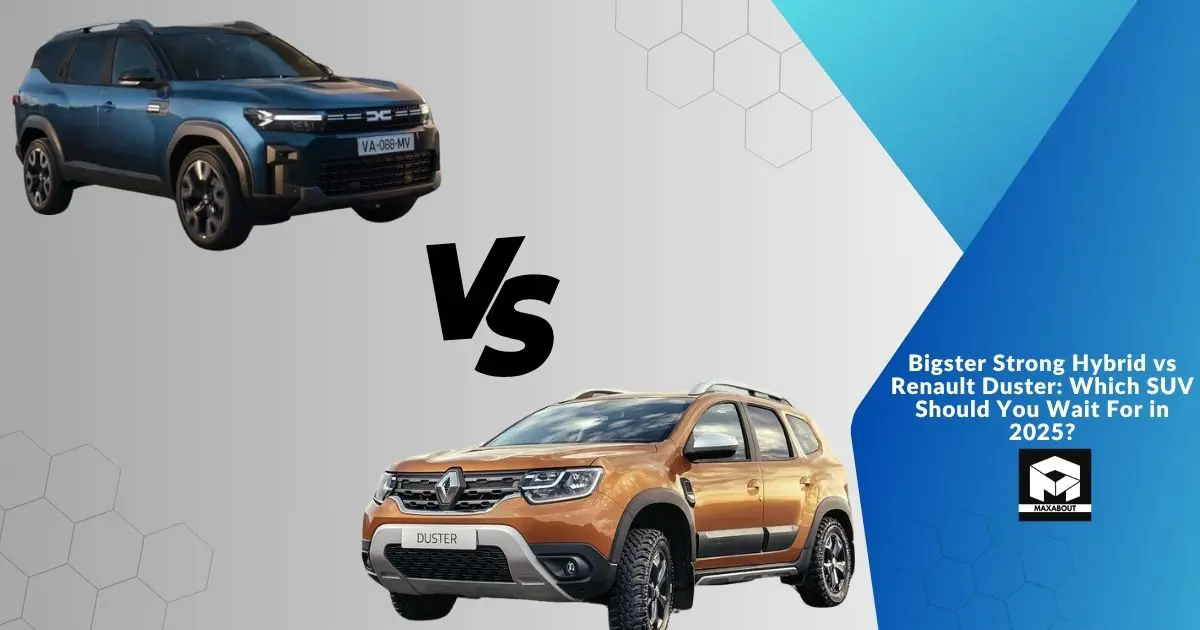
Big news for SUV fans in India! The Renault Duster and its larger sibling, the Bigster, are officially getting strong hybrid options. This is a pretty big deal, especially since they'll be hitting the market right after the initial petrol versions. It shows Renault is really thinking about what Indian car buyers want, balancing new tech with what's practical right now. So, if you've been waiting for a Duster or Bigster with some serious fuel-saving tech, your wait is almost over!
Good news, everyone! Renault is officially bringing strong hybrid versions of the Duster and Bigster to India. This is a big deal because it shows they're serious about offering fuel-efficient options. Initially, there was some uncertainty, but now it's confirmed that we'll see these hybrid models here.
Don't expect the hybrids to arrive right away. Renault is planning a phased launch. First, they'll release the petrol versions of both the Duster and Bigster. The hybrid variants will follow within 6-12 months after the petrol models hit the market. This approach allows Renault to gauge market response and fine-tune their hybrid strategy.
Production of the new Duster is slated to begin in September 2025 at the Renault-Nissan plant in Chennai. This is a crucial step, as it sets the stage for the launch of both the petrol and hybrid models. Keep an eye out for pre-booking announcements around November or December of this year!
The decision to launch petrol models first, followed by hybrids, reflects a calculated approach to balance immediate market demands with the growing interest in electrified vehicles. This strategy allows Renault to test the waters and optimize their hybrid offerings for the Indian market.
Okay, so the Duster Hybrid 140 is pretty interesting. It looks like it's borrowing some tech from overseas. The European version has a 1.6-liter, four-cylinder engine that makes 94 hp. Then they pair it with two electric motors, one with 49 hp and a high-voltage starter generator. All that is powered by a small 1.2 kWh battery. Combined, you get 140 hp.
It's important to note that this setup uses an electric automatic gearbox, and Renault claims it can run on electric power alone for up to 80% of city driving. That's pretty cool for fuel economy.
Now, the Bigster is a bit beefier. It's expected to pack a Hybrid 155 setup. This one uses a 1.8-liter, four-cylinder engine producing 107 hp. The electric motor adds 50 hp, and it's got a 1.4 kWh battery. The total output jumps to 155 hp. It's all about getting that extra power for a bigger vehicle. The Bigster hybrid will be a popular choice.
Both the Duster and Bigster hybrids are designed with city driving in mind. Here's what I'm expecting:
It's all about maximizing efficiency when you're stuck in traffic. The ability to drive in electric-only mode is a big plus for city dwellers.
The Renault Duster and Bigster's foundation is the CMF-B platform, a big deal for Renault's strategy in India. It's not just about these two SUVs; it's about setting the stage for future models and adapting to the unique demands of the Indian market. Let's break down what this platform brings to the table.
The CMF-B platform is designed to handle a variety of powertrains. This is super important because it allows Renault to offer petrol, hybrid, and potentially even electric versions of their vehicles. This flexibility is key in a market like India, where consumer preferences and infrastructure are constantly evolving. It's not just about having options; it's about being able to adapt quickly to changing demands. The platform will deliver two Nissan models as well.
This platform isn't just for the Duster and Bigster. It's the base for future SUVs from both Renault and Nissan. This means we can expect more models sharing similar underpinnings and technologies in the years to come. It's a strategic move to streamline production, reduce costs, and bring new vehicles to market more efficiently. Think of it as a building block approach, where the CMF-B platform is the foundation for a whole range of SUVs.
One of the biggest advantages of the CMF-B platform is its adaptability. It can be tweaked and modified to suit different market needs, whether it's adjusting the suspension for rough roads or optimizing the powertrain for fuel efficiency. This is crucial in a diverse market like India, where driving conditions and consumer expectations can vary widely. It allows Renault to tailor their vehicles to the specific demands of the Indian market, making them more appealing to local buyers.
The CMF-B platform is a strategic asset for Renault, providing the flexibility and adaptability needed to succeed in the Indian market. It's not just about building cars; it's about building a sustainable future for the brand in a dynamic and competitive environment.
Renault is playing a smart game in India. They're not rushing headfirst into EVs like everyone else. Instead, they're looking at what the market actually wants and needs right now. It's a practical approach, balancing today's realities with what might happen down the road.
Renault India's CEO believes that hybrids will be more popular than EVs in India by 2032. They're predicting hybrids will grab a 15-18% market share, while EVs will stay below 10%. It's a bold claim, but it shows they're thinking differently about the Indian market. This is why the new Duster and Bigster are coming with hybrid options.
Renault is focusing on a multi-fuel strategy. They're looking at petrol, CNG, and strong hybrids. This approach makes sense because India has diverse fuel preferences. Plus, there are government incentives for hybrids and CNG. The infrastructure for EVs still has a ways to go, so Renault is being realistic about what will sell in the short term.
Renault is trying to find the sweet spot. They want to offer what people want now, while also preparing for the future. It's a balancing act, but it could pay off big time.
While hybrids are the immediate focus, Renault isn't ruling out CNG or EV versions of the Duster and Bigster. CNG options might be handled through partnerships. As for EVs, they'll need to be affordable and have a decent range to compete with other EVs on the market. The Kiger EV will be a good test of their EV strategy.
Okay, so the new Duster and Bigster are getting some serious upgrades inside. Think big infotainment screens, digital dashboards, and climate control that actually works. It's a big step up from what we're used to, and honestly, it's about time. The new-generation Duster is based on a new CMF-B platform that will also underpin the larger 7-seat version of the SUV. On the CMF-B platform, the All-New Duster has more space for passengers and luggage than the previous generation, while maintaining the same overall length of 4,340mm. Inside, the SUV will come with modern touches like a large infotainment system, a digital instrument panel and modern climate control system.
Renault is loading these SUVs with ADAS (Advanced Driver Assistance Systems). We're talking lane departure warning, blind-spot monitoring, and maybe even adaptive cruise control. It's all about keeping you safe, which is a huge plus. I'm not sure about you, but I'm always a little nervous driving in city traffic, so anything that helps is welcome.
The Bigster is longer than the Duster by 227mm. The wheelbase of the Bigster stands at 2,702mm which again is longer than the Duster’s wheelbase by 45mm. Inside the Bigster will come with three-row seating with the third row being the one that will allow a folding feature. Boot space of the Bigster is rated at 677 litres as compared to the Duster’s 560 litres. Needless to say, both SUVs will allow a folding feature on the rear seats. We believe that the SUVs will share engine and transmission options as well.
The Bigster is the one to watch if you need space. It's got three rows of seats, making it perfect for families. Plus, it's not just about practicality; it looks pretty good too. It's longer than the Duster, so you're getting more room for passengers and cargo. It's a solid option if you're looking for a family-friendly SUV that doesn't skimp on style.
Here's a quick recap:
So, it looks like Renault is really getting serious about the Indian market with these new Duster and Bigster models. It's pretty cool that they're bringing in strong hybrid options, even if they're coming a bit after the regular petrol versions. That CMF-B platform sounds like a big deal too, giving them lots of room to grow with different engine types, maybe even electric cars down the road. It'll be interesting to see how these new SUVs do once they hit the roads here. Seems like Renault is trying to cover all their bases, which is smart.
The new Renault Duster is expected to hit the market in India in early 2026. The larger, seven-seater Bigster will follow after that.
Initially, both the Duster and Bigster will come with gasoline-only engines. The hybrid versions are planned to arrive about 6 to 12 months after the first models.
The Duster hybrid will likely have a 1.6-liter gasoline engine combined with electric motors, making about 140 horsepower. The Bigster hybrid will use a 1.8-liter engine with electric motors, putting out around 155 horsepower.
Yes, the Duster and Bigster are built on a special platform called CMF-B. This platform can support different types of engines, including gasoline, hybrid, and even electric or CNG in the future.
Renault plans to start making the new Duster at their Chennai factory in September 2025. This means you might be able to pre-order one around November or December 2025.
Yes, the Bigster is a bigger version of the Duster with three rows of seats, so it can carry up to seven people.
Maxabout Team
Editorial Team
Specializes in: Automotive News, Reviews, Analysis
Continue Reading
Scroll down or click the button above to load more articles
Want to read more automotive news?
Stay updated with the latest car launches, reviews, and industry insights.
Browse All News