
2025 Electric SUV Showdown: Tata Harrier EV vs XEV 9e Specs & Highlights
So, you're looking at electric SUVs and trying to figure out which one's better: the Tata Harrier EV or the Mahindra XEV 9e? It's a tough choice, honestly. Both of these vehicles are pretty new to the scene and pack a lot of cool stuff. We're going to break down everything from how much they cost t...
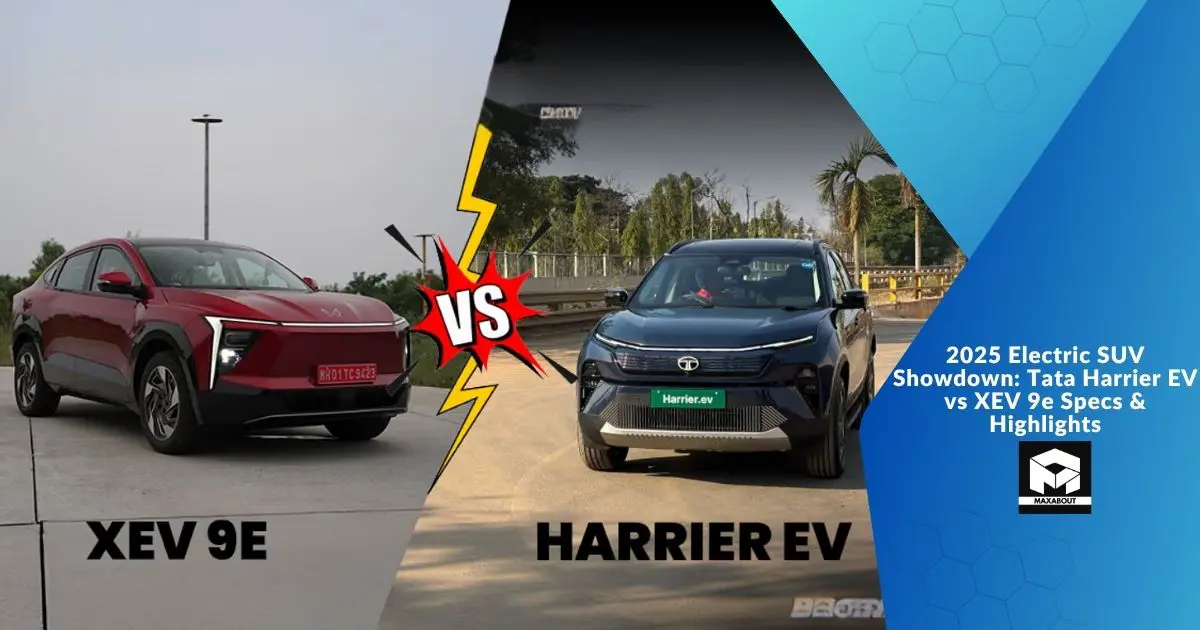
So, you're looking at electric SUVs and trying to figure out which one's better: the Tata Harrier EV or the Mahindra XEV 9e? It's a tough choice, honestly. Both of these vehicles are pretty new to the scene and pack a lot of cool stuff. We're going to break down everything from how much they cost to how big they are, and all the techy bits in between. Let's see how the Tata Harrier EV vs XEV 9e Specs Features Size Compared stacks up, so you can make a good decision.
Okay, let's talk money. When you're eyeing up a new EV, the first thing on your mind is probably the sticker price. The Tata Harrier EV is expected to start around Rs 21.49 Lakh for the Adventure variant, while the XEV 9e... well, pricing info is a bit scarce, but we can expect it to be competitive. The Harrier EV aims to offer a compelling package at its price point, but it's important to consider what you're getting for your money. Are you paying for brand recognition, features, or just the electric powertrain itself?
Don't forget about the cost of installing a home charging unit! This is an expense that often gets overlooked. You'll need to factor in the price of the unit itself, plus installation costs, which can vary depending on your home's electrical setup.
Here's a quick rundown of what to consider:
Getting a home charger is a game changer. It's so much more convenient than relying solely on public charging stations. Plus, you can take advantage of off-peak electricity rates, which can save you money in the long run.
So, who comes out on top in terms of overall value? It's tough to say definitively without knowing the exact price of the XEV 9e and Tata Curvv EV. However, we can look at the bigger picture. Consider the running costs. EVs generally have lower running costs than gasoline cars, thanks to cheaper electricity compared to fuel and reduced maintenance. The Harrier EV is listed at ₹1.20/km, while a comparable gasoline car is ₹3.25/km. Over the long term, this can add up to significant savings. The Harrier EV's pricing strategy necessitates investment in a cost-effective, native EV platform. FWD starting around Rs 20 lakhs and AWD at Rs 23-24 lakhs is expected.
Okay, let's talk batteries. The Tata Harrier EV is expected to come with a decent-sized battery pack, but the exact kWh figure is still under wraps. On the other hand, the XEV 9e boasts a 79 kWh battery. This difference in capacity will likely play a big role in the range each car offers.
Range is the big question with any EV, right? The Tata Harrier EV claims a range of 656 km. The XEV 9e doesn't have a specified range yet. Keep in mind that these are just claimed figures. Real-world range can vary a lot depending on driving style, weather, and how much you use the AC.
Charging speeds are super important for convenience. The XEV 9e supports DC fast charging, and can charge from 20-80% in just 25 minutes using a 120 kW charger. The Harrier EV can charge from 20-80% in 20 minutes with a 140 kW charger. The Harrier EV also offers multiple charging options, including 13A (up to 3.2kW), 7.2kW, 11.2kW, and 180 kW DC.
It's worth noting that charging infrastructure is still developing. While these cars might be capable of fast charging, finding a compatible and available charger out on the road can sometimes be a challenge. Plan your routes accordingly, especially on long trips.
Okay, let's talk about size. The Tata Harrier EV and the XEV 9e definitely have different approaches when it comes to their physical presence. The Harrier EV is noticeably wider and taller. To be exact, the Harrier EV measures 2132 mm in width and 1740 mm in height. The XEV 9e? It comes in at 1907 mm wide. That's a difference you'd probably notice in a parking space. This extra width in the Harrier EV could translate to a more imposing stance on the road, but it might also make it a bit trickier to squeeze into tight spots. It really depends on what you're looking for in a car. For available colors, the XEV 9e colors include Everest White, Ruby Velvet, and Stealth Black.
When it comes to height, the Harrier EV stands taller, which might give it a more commanding view of the road. The wheelbase is another key factor. The Harrier EV has a wheelbase of 2,775 mm, while the XEV 9e's wheelbase is 2,741 mm. That's a difference of 34 mm. A longer wheelbase often translates to better stability and a smoother ride, especially at higher speeds. It can also affect the amount of legroom in the cabin, but we'll get to that later.
Styling is subjective, of course, but there are some objective differences to point out. The Harrier EV seems to be going for a more rugged, SUV-like appearance, while the XEV 9e has a slightly sleeker, more modern vibe. The Harrier EV boasts projector LED headlamps and connected LED taillamps. The XEV 9e also features connected LED taillamps, but it adds illuminated logos and flush-type door handles. The wheel designs are different too, with the Harrier EV sporting 18-inch alloy wheels with aero covers, and the XEV 9e rolling on 19-inch stylised steel wheels. Ultimately, it comes down to personal preference. Do you want something that looks tough and ready for anything, or something a bit more refined and futuristic?
Both cars are trying to make a statement with their designs, but they're speaking different languages. The Harrier EV is shouting "adventure," while the XEV 9e is whispering "innovation."
When it comes to passenger space, the Mahindra XEV 9e appears to have an edge. While both vehicles comfortably seat five, the XEV 9e's design might offer a slightly more spacious feel, especially in the rear. However, some reviews note a high floor board in the XEV 9e, which could impact headroom for taller passengers. It's something to consider if you frequently have adults in the back. The Harrier EV, on the other hand, aims for a balance of comfort and style, but it's important to test both to see which suits your needs best. Both cars offer front and rear cup holders, which is a nice touch for passengers.
Storage is where the XEV 9e really shines. It boasts a significantly larger boot space compared to the Harrier EV, offering 663 liters versus the Harrier's 502 liters. That's a difference of over 160 liters, which could be a deciding factor for families or anyone who frequently hauls a lot of cargo. The XEV 9e also has a bigger frunk, offering 150 liters of space compared to the Harrier EV's 67 liters. If you need maximum storage, the XEV 9e is the clear winner.
While specific wheel sizes can vary depending on the trim level, both the Tata Harrier EV and Mahindra XEV 9e are designed to handle typical road conditions. Ground clearance is an important factor, especially if you live in an area with rough roads or frequent snow. Unfortunately, I don't have the exact ground clearance figures for both models, but it's worth checking before you make a decision. A higher ground clearance can provide extra peace of mind and prevent damage to the undercarriage. The wheelbase is also slightly different, with the Harrier EV having 2,741 mm and the XEV 9e having 2,775 mm. This difference of 34 mm might affect the car's handling and turning radius, but it's unlikely to be noticeable in everyday driving.
Both the Tata Harrier EV and the XEV 9e are expected to come with modern infotainment systems. Expect large touchscreens, likely around 10-12 inches, with support for Android Auto and Apple CarPlay. A digital driver's display is also a given, probably around 10 inches or larger, showing speed, battery level, and other important info. It's all about keeping you connected and informed while you drive.
When it comes to comfort, both cars will probably have features like automatic climate control, keyless entry, and push-button start. Cruise control is pretty standard these days, and adjustable steering (height and reach) is a must. Ventilated seats might be available on higher trims of the Harrier EV, while the XEV 9e might skip this feature to keep costs down. Power-adjustable seats are also likely, at least for the driver, and maybe even for the front passenger.
Safety is a big deal, so expect both EVs to pack a bunch of driver-assistance systems. This could include things like:
It's worth noting that the specific features and their availability might vary depending on the trim level you choose. Always check the official specs to know exactly what you're getting. These features are designed to make driving safer and more convenient.
When it comes to safety, crash test results are a big deal. We're all curious how these EVs hold up in simulated accidents. It's worth noting that official crash test data for the XEV 9e might be limited, especially compared to more established models like the Tata Harrier EV. The Harrier EV, benefiting from Tata's increased focus on safety, will likely have more readily available and potentially higher scores from organizations like Global NCAP or Bharat NCAP. Structural rigidity plays a huge role here, and the materials used in construction can significantly impact the outcome.
Predicting safety scores before official tests is always tricky, but we can make some educated guesses. The Tata Harrier EV, given Tata's recent emphasis on safety and their track record with other models, is expected to perform well. The XEV 9e's scores are more of an unknown. Factors influencing these scores include:
So, picking between the Tata Harrier EV and the Mahindra XEV 9e really comes down to what you like. Both are good electric cars, but they have different looks. If you want a classic SUV that looks tough, the Harrier EV is probably for you. But if you're into something more modern and sleek, the XEV 9e might be a better fit. It's not just about the numbers; it's about which one feels right for you.
The Tata Harrier EV starts at about $25,700, making it a bit cheaper than the Mahindra XEV 9e, which begins around $26,300. However, the XEV 9e might have extra costs for its home charging unit.
The base Tata Harrier EV comes with a 65 kWh battery, while the base Mahindra XEV 9e has a 59 kWh battery. For the top models, the XEV 9e offers a 79 kWh battery, slightly bigger than the Harrier EV's 75 kWh battery.
The Mahindra XEV 9e claims a range of 656 km, while the Tata Harrier EV claims 627 km. In real-world driving, both cars are expected to go about 500 km on a full charge.
The Tata Harrier EV is quicker, going from 0 to 100 km/h in just 6.2 seconds. The Mahindra XEV 9e takes a bit longer, at 6.8 seconds.
The Mahindra XEV 9e is longer overall and has a longer wheelbase, which means more legroom inside. However, the Tata Harrier EV is wider and taller, giving it a more muscular look.
The Tata Harrier EV has cool features like a panoramic sunroof, a digital key, and a special camera system for a 540-degree view. The Mahindra XEV 9e stands out with its three large screens inside and a powerful 16-speaker sound system. Both cars have advanced safety features like ADAS.
Maxabout Team
Editorial Team
Specializes in: Automotive News, Reviews, Analysis
Continue Reading
Scroll down or click the button above to load more articles
Want to read more automotive news?
Stay updated with the latest car launches, reviews, and industry insights.
Browse All News